
Free delivery on all NHS prescriptions — order now
- Home
- Men's Health
- Premature Ejaculation
- EMLA Cream
EMLA Cream

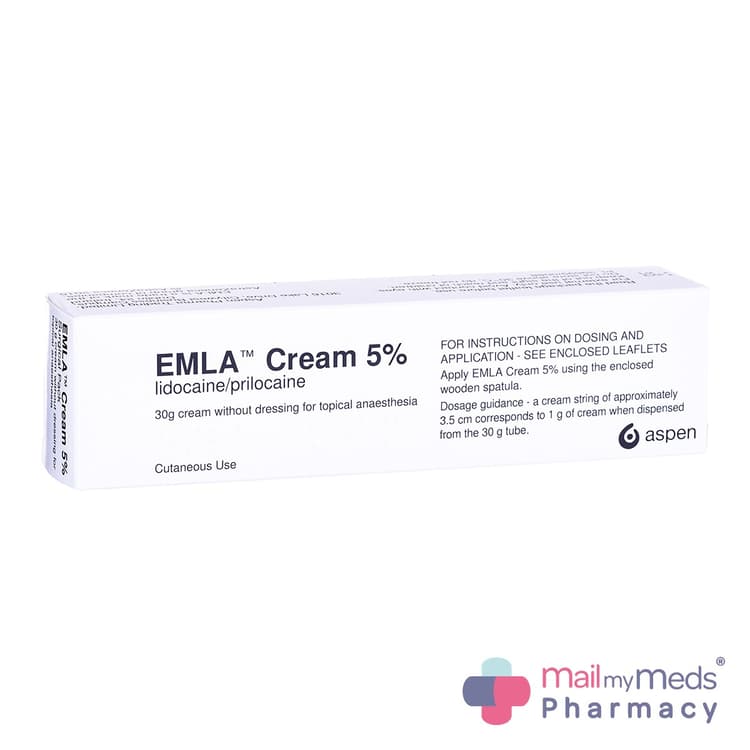


Images for illustrative purposes only
EMLA Cream is a topical local anaesthetic used to numb the surface of the skin before medical procedures such as injections, blood tests or minor surgical treatments by utilising the combined effects of lidocaine and prilocaine.
- Contains active ingredients lidocaine and prilocaine
- Effective local anaesthetic for numbing the skin surface
- Suitable for use before needle procedures or minor skin surgery
- Available for home delivery via our registered UK pharmacy
More information
"EMLA Cream is a widely trusted topical anaesthetic frequently prescribed to reduce pain sensations on the skin during needle insertions or small dermatological procedures. Our clinical team ensures that this treatment is suitable for your specific needs through a secure online assessment." – Rachael Clarke MRCPharm MFRPSI FRSPH (GPHC Number: 2061366)
You can buy EMLA Cream through Mail my Meds by completing a simple online consultation that is reviewed by a UK registered prescriber to ensure patient safety. Once your consultation is approved, your medication is dispensed and shipped directly from our registered pharmacy (GPHC Number: 9011560) in discreet packaging to maintain your privacy.
The price of EMLA Cream varies depending on the quantity required for your treatment plan and whether it is fulfilled via a private or NHS prescription. We aim to provide competitive pricing for all patients, and the final cost will be clearly displayed during the checkout process after your clinical assessment is complete.
We provide several reliable delivery options to ensure you receive your medication at a time that suits you. All orders are sent using tracked services to guarantee secure arrival, and you can select your preferred shipping method at the point of purchase.
EMLA Cream is a topical numbing agent known as a local anaesthetic that is applied directly to the skin to prevent pain during minor medical or cosmetic procedures. It is commonly used for patients facing vaccinations, blood sampling or the removal of skin lesions to make the experience more comfortable.
The active ingredients in EMLA Cream are lidocaine and prilocaine, which belong to a group of medicines called local anaesthetics. These two substances work together in a specific ratio to penetrate the skin barrier and temporarily block pain signals from reaching the nerve endings.
Many users report a significant reduction in discomfort during needle-related procedures when the cream is applied correctly and allowed enough time to work. Patients often appreciate the ease of application, though some may notice temporary skin reactions like paleness or slight redness at the application site.
The Patient Information Leaflet (PIL) provides essential details regarding the safe use, storage and potential side effects of your medication. You should read the leaflet thoroughly before using the product, and a digital version is available for your reference alongside your physical order.
EMLA Cream works by releasing lidocaine and prilocaine into the epidermal and dermal layers of the skin to temporarily stop pain signals from travelling to the brain. By numbing the local nerve endings in the area where the cream is applied, the skin becomes desensitised to sharp sensations or pressure.
Apply a thick layer of the cream to the required area of skin and cover it with an airtight dressing to allow the active ingredients to absorb properly. It is important to follow the specific timings provided by your healthcare professional to ensure the area is sufficiently numbed before your procedure begins.
The correct dosage of EMLA Cream depends on the age of the patient and the type of procedure being performed. General guidelines suggest:
| User Category | Application Time | Typical Use |
|---|---|---|
| Adults | 1 to 5 hours | Minor skin procedures |
| Children (1-11 years) | 1 to 5 hours | Injections or blood tests |
| Infants (3-11 months) | Maximum 1 hour | Vaccinations |
Side effects of EMLA Cream are generally mild and localised to the area where the cream was applied. While most people do not experience significant issues, some common reactions include:
- Temporary blanching (whiteness) of the skin
- Mild redness or swelling
- A slight tingling or burning sensation upon application
- Itching at the site of the dressing
You should not use EMLA Cream on open wounds, broken skin or near the eyes and ears unless specifically instructed by a doctor. It is important to inform your prescriber if you have rare blood pigment disorders, such as methaemoglobinaemia, or if you are allergic to any amide-type local anaesthetics.
EMLA Cream is often compared to other topical anaesthetics like LMX4, though it remains a primary choice due to its dual-action formula. While some alternatives contain only lidocaine, the combination of lidocaine and prilocaine in EMLA is designed to provide a deeper level of anaesthesia for various skin depths.
Can I use EMLA Cream for tattoos?
While EMLA is often used for minor skin procedures, you should consult with your pharmacist or the tattoo artist regarding its suitability for specific cosmetic applications.
How long does the numbing effect last?
The numbing effect typically lasts for at least two hours after the dressing and cream have been removed from the skin.
Is EMLA Cream available on the NHS?
Yes, EMLA Cream can be prescribed via the NHS for specific medical needs, and you can fulfil your NHS prescription through the Mail my Meds platform.
The information provided on this page is for general informational purposes only and should not replace seeking advice from a medical professional for personalised care. Always consult with a doctor or pharmacist to ensure a treatment is appropriate for your specific health needs.
Our content is regularly reviewed by our team of medical experts to ensure it remains up to date and accurate. We adhere to strict clinical standards to provide reliable health information for all our patients across the UK.
Author


Content last updated: