
Free delivery on all NHS prescriptions — order now
- Home
- Chronic Conditions
- Underactive Thyroid
- Levothyroxine
Levothyroxine

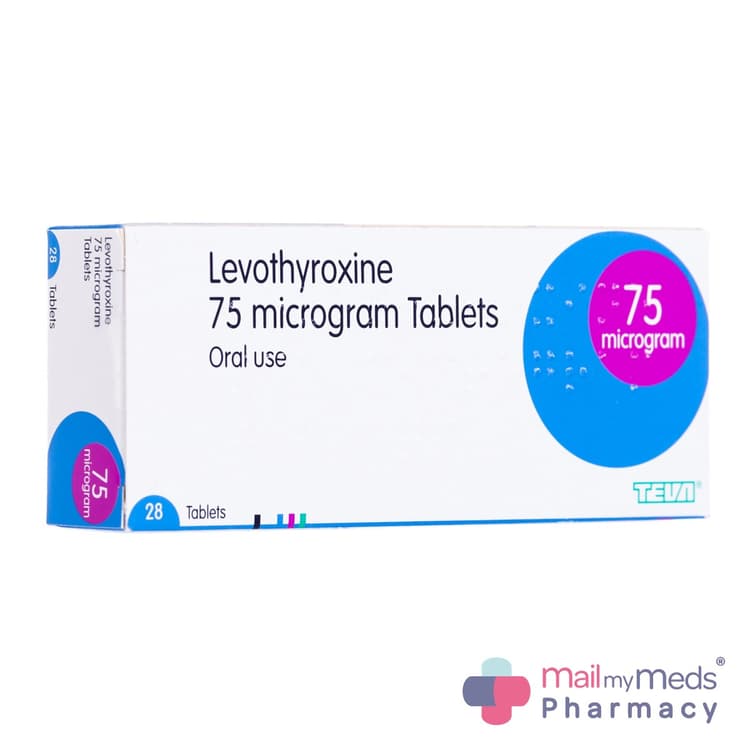


Images for illustrative purposes only
Levothyroxine is a synthetic thyroid hormone used as the primary treatment for hypothyroidism (an underactive thyroid gland), effectively restoring metabolic balance by replacing the active ingredient thyroxine (T4), which your body is unable to produce in sufficient quantities.
- The gold-standard medication for managing long-term thyroid hormone deficiency
- Specifically formulated to reverse fatigue, unexplained weight gain, and sensitivity to cold
- Available in multiple dosage levels to suit individual requirements
- Suitable for fulfilling both new private prescriptions and repeat NHS prescriptions
More information
You can buy levothyroxine online safely through Mail My Meds by completing a convenient online consultation with a UK-registered prescriber who will review your clinical history to ensure the medication is appropriate for you. Once your consultation is approved, your prescription is fulfilled and shipped directly from our registered pharmacy (GPHC Number: 9011560) in discreet, secure packaging to maintain your privacy.
Levothyroxine prices vary depending on the strength and quantity required for your maintenance dose, starting from competitive rates for private patients while remaining free for those with a valid NHS medical exemption certificate. We provide transparent pricing during the checkout process, ensuring you know the exact cost of your medication before completing your order.
We offer several reliable delivery options to ensure you never miss a dose of your essential thyroid medication.
Levothyroxine is a thyroid hormone replacement medication used to treat primary, secondary, and subclinical hypothyroidism by replenishing the body's levels of thyroxine (T4). When your thyroid gland is underactive, your metabolism slows down, leading to symptoms like brain fog, hair loss and joint pain. This medication acts as a direct substitute for the natural hormone to bring your bodily functions back to their normal rhythm.
The active ingredient in this medication is levothyroxine sodium, a manufactured form of the hormone T4 that is chemically identical to the thyroxine naturally produced by the human thyroid gland.
Most patients find that their energy levels and mood significantly improve within the first few weeks of starting treatment, although it can take several months to find the perfect "maintenance dose" that fully resolves all symptoms. Research suggests that while the medication is highly effective, users often report that staying with the same brand of levothyroxine is preferable for maintaining stable TSH levels and avoiding a return of symptoms.
The Patient Information Leaflet (PIL) provides comprehensive details on ingredients, contraindications, and storage. It is essential to read this document before starting your course of treatment. You can access the digital version of the leaflet through the electronic Medicines Compendium (eMC) or find a physical copy included in every box of medication we dispense.
Levothyroxine works by replacing the missing thyroxine hormone in your bloodstream, which allows your body's cells to convert T4 into T3 (liothyronine), the active hormone that regulates your metabolic rate. By restoring these hormone levels, the medication signals your pituitary gland to reduce the production of Thyroid Stimulating Hormone (TSH), thereby balancing the endocrine system and preventing the long-term complications of an underactive thyroid.
You should take levothyroxine once daily in the morning on an empty stomach, at least 30 to 60 minutes before having breakfast or any caffeinated drinks like tea or coffee. To maximise absorption, swallow the tablet whole with a full glass of water and try to take it at the same time every day to keep your hormone levels consistent.
The standard dosage for adults usually begins between 50mcg and 100mcg per day, though your GP or specialist may start you on a lower 25mcg dose if you are over 65 or have a history of heart disease. Your progress is monitored through regular blood tests to check if your dose is correct. A "high dose" is typically considered anything above 150mcg to 200mcg daily, depending on your body weight and TSH response.
Side effects of levothyroxine are rare when you are on the correct dose, but they can occur if your dose is too high, effectively mimicking an overactive thyroid. Common adverse reactions include:
- Headaches and sweating
- Palpitations or rapid heart rate
- Difficulty sleeping (insomnia)
- Muscle cramps or tremors
- Diarrhoea or vomiting
It is important to inform your prescriber if you have existing heart conditions, diabetes, or adrenal gland problems, as levothyroxine can increase the workload on your heart and change your blood sugar requirements. Certain substances can significantly interfere with how well your body absorbs the medication:
| Substance | Required Gap | Reason |
|---|---|---|
| Coffee/Tea | 60 Minutes | Caffeine reduces gut absorption. |
| Calcium/Iron | 4 Hours | Minerals bind to the medication. |
| Magnesium | 4 Hours | Can reduce the effectiveness of T4. |
Levothyroxine is the standard first-line treatment in the UK because it has a long half-life of 6–7 days, providing more stable hormone levels than alternatives like liothyronine (T3), which has a much shorter duration of action. While some patients explore "natural thyroid extracts," these are not routinely recommended by the NHS or NICE due to concerns over inconsistent hormone concentrations and lack of long-term safety data compared to synthetic levothyroxine.
Does levothyroxine cause weight loss?
Levothyroxine can lead to weight loss if your previous weight gain was caused by an underactive thyroid, as the medication restores your metabolism and helps your body shed excess water weight associated with hypothyroidism. However, it is not a weight-loss drug and should never be used to treat obesity in individuals with normal thyroid function.
Can I take levothyroxine at night?
Yes, you can take levothyroxine at night as long as you take it on an empty stomach, at least 3 to 4 hours after your last meal, to ensure it is absorbed properly. Some patients find this more convenient than waiting for coffee in the morning.
How long does it take for levothyroxine to work?
You may begin to feel more energetic within 2 to 3 weeks of starting treatment, but it often takes 6 to 12 weeks for your TSH levels to stabilise and for the full physical benefits to be felt. Consistency is key to seeing long-term improvement.
Can I take ashwagandha or collagen with it?
You should consult your pharmacist before taking supplements like ashwagandha, as it can stimulate the thyroid and potentially interfere with your prescribed dose. Collagen is generally safe but should be taken at a different time of day to avoid any potential interference with tablet dissolution.
The information provided on this page is for general informational purposes only and is not a substitute for professional medical advice, diagnosis, or treatment. Always seek the advice of your GP, pharmacist, or other qualified health provider with any questions you may have regarding a medical condition or medication. Never disregard professional medical advice or delay in seeking it because of something you have read on this website.
Our clinical content is regularly reviewed and updated by our team of UK-registered medical experts and pharmacists to ensure all information aligns with the latest NICE, BNF and NHS guidelines. We prioritise clinical evidence and patient safety to provide you with the most reliable health resources available.

