
Free delivery on all NHS prescriptions — order now
- Home
- Travel Health
- Malaria
- Atovaquone/Proguanil
Atovaquone/Proguanil

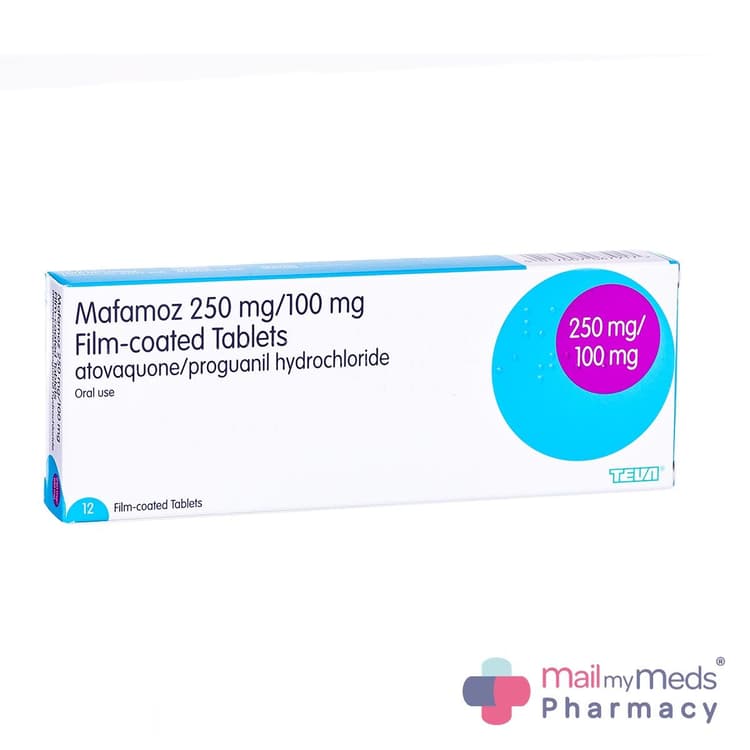


Images for illustrative purposes only
- Highly effective prophylaxis against Plasmodium falciparum malaria
- Convenient daily dosing schedule starting just 1 to 2 days before travel
- Short post-travel course requiring only 7 days of tablets after returning
- Combined active ingredients for enhanced protection in chloroquine-resistant areas
More information
"Atovaquone/Proguanil is a gold-standard antimalarial treatment typically prescribed to prevent Plasmodium falciparum malaria, especially for travellers visiting regions with known drug resistance. Its rapid onset and brief post-exposure regimen make it a preferred choice for short-term international travel to endemic areas." - Rachael Clarke MRCPharm MFRPSI FRSPH (GPHC Number: 2061366)
You can buy Atovaquone/Proguanil safely through the Mail my Meds online pharmacy platform by completing a straightforward clinical consultation. Our registered UK prescribers review your medical history and travel destination to ensure the medication is suitable for you. Once approved, your order is fulfilled and shipped directly from our pharmacy (GPHC Number: 9011560) in discreet packaging to protect your privacy.
The price of Atovaquone/Proguanil varies depending on the quantity required for your specific trip duration. As a generic version of Malarone, it offers a cost-effective solution for travellers seeking high-level protection without the branded price tag. At Mail my Meds, we aim to provide competitive pricing for all private prescriptions and repeat NHS services.
We offer a range of flexible delivery options to ensure your malaria tablets arrive well before your departure date. All orders are sent via secure courier services with tracking available so you can monitor your parcel from our pharmacy to your doorstep.
Atovaquone/Proguanil is an antimalarial drug used primarily to prevent infection from malaria parasites transmitted through mosquito bites. In the UK, it is a key component of travel health planning for those visiting high-risk zones in Africa, Asia and South America. While primarily used for chemoprophylaxis (prevention), it is also used in higher doses as a clinical treatment for uncomplicated malaria cases.
The active ingredients in this medication are atovaquone and proguanil hydrochloride. Each standard adult tablet typically contains 250mg of atovaquone and 100mg of proguanil hydrochloride. These two compounds work synergistically to target the life cycle of the parasite within the human body.
Many users report a positive experience with Atovaquone/Proguanil due to its shorter treatment course compared to other antimalarials. Travellers often prefer it because it does not require the month-long follow-up period associated with alternatives like doxycycline. While some experience mild gastrointestinal effects, most people complete their course without significant disruption to their holiday.
The Patient Information Leaflet (PIL) contains essential data regarding the safe use of your medication. It includes a full list of ingredients, detailed side effects and manufacturer guidance. You should read the leaflet provided with your specific brand of Atovaquone/Proguanil thoroughly before starting your course.
Atovaquone/Proguanil works by interfering with the ability of malaria parasites to reproduce and survive in the bloodstream and liver. Atovaquone inhibits the parasite's mitochondrial electron transport, while proguanil acts as a dihydrofolate reductase inhibitor. Together, they effectively kill the parasites before they can cause the systemic symptoms of malaria fever.
You should take Atovaquone/Proguanil once daily at the same time each day, ideally with food or a milky drink to increase absorption. Taking the tablet with a meal also helps to minimise the risk of stomach upset. If you vomit within one hour of taking your dose, you should take another tablet immediately to ensure continuous protection.
The standard dosage for malaria prevention in adults is one tablet per day. The timing of the course is critical for effectiveness:
- Start: 1 to 2 days before entering the malaria-risk area.
- During: One tablet daily for the duration of your stay.
- Finish: Continue for 7 days after leaving the risk area.
Like all medicines, Atovaquone/Proguanil can cause side effects, though not everyone experiences them. Common side effects are generally mild and may include:
| Frequency | Common Symptoms |
|---|---|
| Very Common | Headache, nausea, stomach pain, diarrhoea |
| Common | Dizziness, insomnia, vivid dreams, loss of appetite, fever, cough |
| Uncommon | Palpitations, anxiety, hair loss, skin rash |
Before taking Atovaquone/Proguanil, inform your prescriber if you have severe kidney disease or liver problems. It is generally not recommended during pregnancy or breastfeeding unless specifically advised by a specialist. This medication may interact with other drugs such as anticoagulants (e.g., warfarin) or certain antibiotics like rifampicin.
Atovaquone/Proguanil is often compared to Doxycycline and Mefloquine based on dosing and side effect profiles.
- Atovaquone/Proguanil: Taken for 7 days post-travel. Generally well-tolerated.
- Doxycycline: Taken for 4 weeks post-travel. Can cause sun sensitivity.
- Mefloquine: Weekly dose but may cause neuropsychiatric side effects.
Can I get Atovaquone/Proguanil on the NHS?
Antimalarials for travel are usually not available on a standard NHS prescription and must be obtained via a private prescription. Mail my Meds provides a convenient way to access these private prescriptions through our online portal.
What happens if I miss a dose?
If you miss a dose, take it as soon as you remember with food. If it is nearly time for your next dose, skip the missed one and continue your normal schedule. Never take a double dose to make up for a missed one.
Is Atovaquone/Proguanil the same as Malarone?
Yes, Atovaquone/Proguanil is the generic name for Malarone. They contain the same active ingredients in the same strengths and work in identical ways to prevent malaria.
The information provided on this page is for general informational purposes only and should not replace seeking advice from a medical professional for personalised care. Always consult with a qualified healthcare provider regarding your specific travel health requirements and medical history.
Our content is regularly reviewed by our team of medical experts to ensure it remains up to date and accurate. We adhere to the latest clinical guidelines to provide reliable information for our patients in the UK.


