
Free delivery on all NHS prescriptions — order now
- Home
- Chronic Conditions
- Diabetes
- Linagliptin (Trajenta)
Linagliptin (Trajenta)

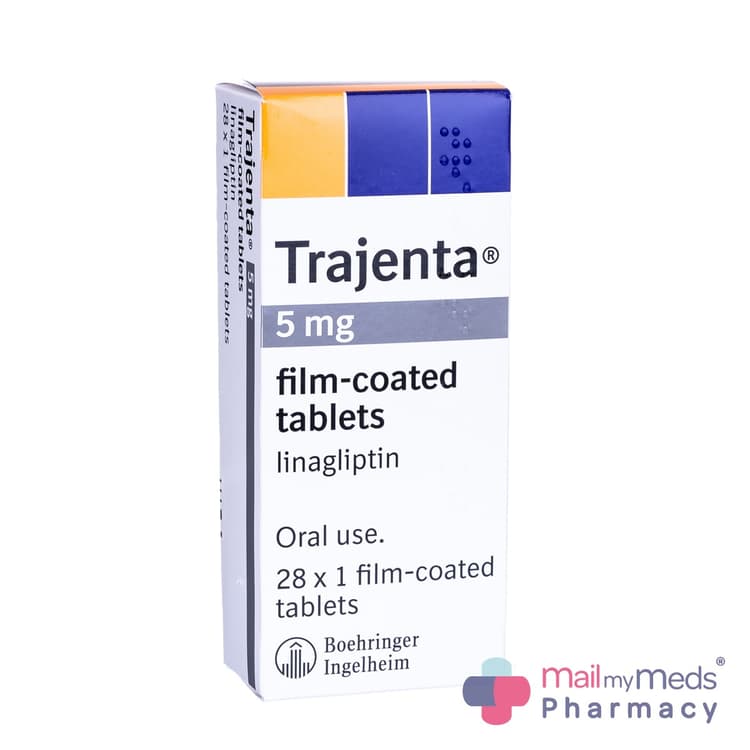


Images for illustrative purposes only
Linagliptin (Trajenta) is a once daily, prescription-only tablet for type 2 diabetes, a common long-term condition where the body becomes resistant to insulin and blood sugar (glucose) rises too high. Type 2 diabetes affects nearly 6 million people across the UK and is usually linked to genetics, older age, carrying excess weight and inactivity, causing symptoms such as tiredness, excessive thirst, needing to pass urine often and blurred vision. Alongside diet, exercise and blood glucose monitoring, it is managed with prescription medicines including metformin, SGLT2 inhibitors and DPP-4 inhibitors (gliptins) such as linagliptin.
- Effective glycaemic control for adults with Type 2 diabetes
- Contains the active ingredient Linagliptin (DPP-4 inhibitor)
- Simple once-daily tablet routine for consistent management
- Available via online consultation with UK-registered prescribers
More information
At a glance
- Linagliptin is a DPP-4 inhibitor (a "gliptin") used to treat type 2 diabetes in adults. Its original brand name is Trajenta.
- It is taken as one 5 mg tablet once a day, with or without food, to help control blood sugar (glycaemic control).7
- It works by raising the incretin hormones GLP-1 and GIP, which prompt the pancreas to release insulin only when blood glucose is high and reduce the sugar released by the liver.
- Linagliptin needs no dose change for kidney (renal) impairment, so it is often chosen for people with chronic kidney disease (CKD).7
- On its own it rarely causes low blood sugar ("hypos"), but the risk rises when it is combined with a sulfonylurea or insulin.
- It is not suitable for type 1 diabetes or diabetic ketoacidosis (DKA).
- It is a prescription-only medicine, available from Mail My Meds after a free online consultation.
"Linagliptin, still widely known by its brand name Trajenta, is a once-daily tablet we prescribe to help adults with type 2 diabetes bring high blood sugar under control, usually alongside metformin or when metformin is not suitable. One of its most useful features is that it does not need a dose adjustment if your kidneys are not working well, which makes it a practical option for many people with chronic kidney disease. Because it only nudges insulin release when your glucose is high, on its own it rarely causes hypos. If you have recently been diagnosed with type 2 diabetes, or your current treatment is not keeping your levels where they should be, it is worth getting reviewed to see whether linagliptin could be a suitable option for you."
Rachael Clarke MRCPharmSuperintendent Pharmacist, Mail My Meds
Linagliptin works by blocking an enzyme called dipeptidyl peptidase-4 (DPP-4), which raises the levels of your body's natural incretin hormones and helps your pancreas release insulin when your blood sugar is high.5 Because it belongs to the DPP-4 inhibitor class, it is often grouped with other "gliptins" such as sitagliptin and alogliptin.
Normally, the incretin hormones glucagon-like peptide-1 (GLP-1) and glucose-dependent insulinotropic polypeptide (GIP) are released after you eat, but they are broken down within minutes by DPP-4. By slowing that breakdown, linagliptin helps your body:
- release more insulin from the pancreas, but only when blood glucose is raised (glucose-dependent insulin secretion);
- produce less glucagon, the hormone that pushes blood sugar up;
- lower the amount of glucose made by the liver (hepatic glucose output).
This glucose-dependent action is the reason linagliptin, used on its own, carries a low risk of hypos: it tends to leave insulin alone when your sugar levels are already normal.
Type 2 diabetes is a common, long-term (chronic) condition where your body cannot use insulin properly (insulin resistance) and gradually cannot make enough of it, so too much glucose stays in your blood.4 Insulin is the hormone that moves glucose from your bloodstream into your cells for energy. Over time, persistently high blood sugar (measured as HbA1c) can damage blood vessels and nerves, raising the risk of heart disease, stroke, kidney disease (nephropathy), eye damage (retinopathy) and nerve damage (neuropathy).
Unlike type 1 diabetes, where the body makes little or no insulin, type 2 diabetes usually develops slowly, often over years, and is strongly linked to lifestyle and genetic factors. Common symptoms include:
- feeling very thirsty and passing urine more often, especially at night;
- tiredness and low energy;
- blurred vision;
- cuts and wounds that heal slowly;
- recurrent infections, such as thrush;
- unexplained weight loss.
Many people have no obvious symptoms at first, which is why type 2 diabetes is often picked up through a routine blood test.
Type 2 diabetes is very common in the UK. Diabetes UK reports that nearly 6 million people are living with diabetes, of whom more than 4.7 million are diagnosed, and around 90% of all cases are type 2.3 On top of this, an estimated 1.3 million people are thought to be living with type 2 diabetes that has not yet been diagnosed.
The picture is one of steady growth. Diabetes UK also estimates that around 6.9 million people in the UK have raised blood sugar levels (often called prediabetes) that put them at higher risk of developing type 2 diabetes.3 Taken together, that means more than one in five UK adults is living with either diabetes or prediabetes, which is why well-tolerated treatment options, alongside lifestyle support, remain so important.
Type 2 diabetes is caused by a combination of insulin resistance and a gradual fall in the amount of insulin the pancreas can make, driven by both genetic and lifestyle factors.4 No single cause is to blame, but several things clearly increase your risk:
- Age. Risk rises from your 40s (or from your 25s if you are of South Asian, African, African-Caribbean or Black African descent).
- Family history. Having a parent, brother or sister with type 2 diabetes increases your risk.
- Weight and body shape. Being overweight, and especially carrying weight around your middle, is the single biggest modifiable risk factor.
- Physical inactivity. A largely sedentary lifestyle reduces how well your body uses insulin.
- Ethnicity. People of South Asian, Black African and African-Caribbean backgrounds are at higher risk.
- Related conditions. High blood pressure, polycystic ovary syndrome (PCOS) and a history of gestational diabetes all raise your risk.
Yes, lifestyle changes are the foundation of managing type 2 diabetes and, for some people, can be powerful enough to put the condition into remission.4 Medicines such as linagliptin work best when they sit alongside healthy habits rather than replacing them. The most effective non-medical steps include:
- Reaching a healthier weight. Losing excess weight improves insulin sensitivity, and substantial, sustained weight loss can lead to remission in some people diagnosed within the last few years.
- Eating well. A balanced diet lower in refined carbohydrates and sugary foods, with plenty of vegetables, fibre and wholegrains, helps steady blood sugar.
- Moving more. Aiming for around 150 minutes of moderate activity a week helps your muscles use glucose.
- Stopping smoking and moderating alcohol. Both improve your overall cardiovascular risk.
"I always tell patients that a tablet is only part of the plan. Even modest, steady weight loss and regular activity can noticeably improve your HbA1c, and for some people caught early it can mean fewer medicines over time. Linagliptin is there to support that work, not to do it all on its own."
Rachael Clarke MRCPharmSuperintendent Pharmacist, Mail My Meds
Free, NHS-backed structured education programmes and the resources from Diabetes UK can help you build these habits with support from people who understand the condition.
Type 2 diabetes is usually treated in steps: lifestyle changes first, then metformin, then one or more add-on medicines if your blood sugar remains high.6 Each class of medicine lowers blood sugar in a different way, and they vary in their effect on weight, their risk of hypos and their wider benefits for the heart and kidneys. The table below compares the main options.
| Treatment class (examples) | How it works | Effect on weight | Risk of hypos | Notes |
|---|---|---|---|---|
| Metformin (biguanide) | Reduces glucose made by the liver and improves insulin sensitivity | Weight neutral | Low | Usual first-line medicine; can cause tummy upset |
| DPP-4 inhibitors/gliptins (linagliptin/Trajenta, sitagliptin, alogliptin) | Boost incretin hormones to raise insulin when glucose is high | Weight neutral | Low | Once daily and well tolerated; modest blood sugar lowering |
| SGLT2 inhibitors (empagliflozin, dapagliflozin) | Help the kidneys remove excess glucose in the urine | Weight loss | Low | Added heart and kidney benefits; risk of genital thrush |
| GLP-1 receptor agonists (injectable) | Mimic the GLP-1 incretin hormone | Weight loss | Low | Strong blood sugar lowering; usually injected |
| Sulfonylureas (gliclazide) | Stimulate the pancreas to release more insulin | Weight gain | Higher | Strong and inexpensive; higher hypo risk |
| Pioglitazone (thiazolidinedione) | Improves how the body responds to insulin | Weight gain | Low | Avoided in heart failure; taken as a tablet |
| Insulin | Replaces or tops up the body's own insulin | Weight gain | Higher | Very effective; needs injections and monitoring |
Where does linagliptin fit? As a DPP-4 inhibitor, it offers modest but reliable blood sugar lowering, with a low risk of hypos and no weight gain. That makes it a useful add-on to metformin, or a sensible option when metformin is not suitable.6 It can be combined with metformin, a sulfonylurea, pioglitazone, an SGLT2 inhibitor or insulin, and is also available as fixed-dose combination tablets: Jentadueto (linagliptin with metformin) and Glyxambi (linagliptin with empagliflozin). People who need stronger blood sugar lowering, or who have established heart or kidney disease, may be offered an SGLT2 inhibitor or a GLP-1 receptor agonist instead of, or in addition to, a gliptin.
Metformin is by far the most commonly prescribed type 2 diabetes medicine in the UK and is recommended by NICE as the usual first-line treatment for most people.6 When a single medicine is not enough, or metformin cannot be used, DPP-4 inhibitors such as linagliptin are among the most widely used second-line options, along with gliclazide and, increasingly, the SGLT2 inhibitors empagliflozin and dapagliflozin. Linagliptin is a particularly popular gliptin because it is taken once a day and needs no dose change for reduced kidney function.
Linagliptin is a prescription-only medicine, so in the UK you can only get it after an assessment by a qualified prescriber; it cannot be bought over the counter.5 You can be prescribed it by your GP or diabetes team, or through a regulated online pharmacy. At Mail My Meds, a free online consultation lets a GPhC-registered prescriber review your health and decide whether linagliptin is appropriate for you, without the need for a face-to-face appointment. Because we are a registered UK pharmacy, your medicine is dispensed and checked by qualified pharmacy professionals.
Starting treatment is straightforward and takes just a few minutes to begin. Here is what happens:
- Complete a free online consultation. Answer a short, confidential questionnaire about your health, your diabetes, and any other medicines you take.
- Prescriber review. A GPhC-registered prescriber checks that linagliptin is safe and suitable for you. They may ask for recent blood results (such as your HbA1c or kidney function) or get in touch for more information.
- Dispensed and delivered. If treatment is approved, your medicine is dispensed by our UK pharmacy and sent to you in discreet, tracked packaging. You can manage your repeat prescriptions online when it is time for your next supply.
If linagliptin is not the right fit, our prescribers will explain why and, where appropriate, suggest alternatives to discuss.
Linagliptin is suitable for many adults with type 2 diabetes whose prescriber judges it appropriate, either on its own when metformin cannot be used, or as an add-on to other diabetes medicines.5 It can be a particularly good option if you have chronic kidney disease, because it needs no dose adjustment at any level of kidney function.
Linagliptin is not suitable for everyone. You should not take it, or your prescriber will take extra care, if you:
- have type 1 diabetes or diabetic ketoacidosis (DKA), as it does not treat these;
- have ever had an allergic reaction to linagliptin;
- have had pancreatitis or other problems with your pancreas;
- are pregnant, trying to become pregnant, or breastfeeding, as linagliptin is not normally used at these times;
- are under 18, as it is not established for children.
"The feature that most often makes linagliptin stand out for me is kidney safety. Many diabetes tablets need their dose reduced, or have to be stopped, as kidney function declines. Linagliptin is cleared mainly through the gut rather than the kidneys, so it can usually be continued at the same 5 mg dose even in more advanced chronic kidney disease. That said, everyone is different, which is why a proper assessment comes first."
Rachael Clarke MRCPharmSuperintendent Pharmacist, Mail My Meds
Most people tolerate linagliptin well, and when side effects do occur they are usually mild.7 The table below groups the recognised side effects by how often they happen, based on the medicine's Summary of Product Characteristics.
| How often | Side effects |
|---|---|
| Very common (more than 1 in 10) | Low blood sugar (hypoglycaemia), mainly when linagliptin is taken with a sulfonylurea and metformin |
| Common (up to 1 in 10) | Raised lipase (a pancreatic enzyme seen on a blood test) |
| Uncommon (up to 1 in 100) | Stuffy or runny nose and sore throat (nasopharyngitis), cough, constipation, rash, hypersensitivity, raised amylase |
| Rare (up to 1 in 1,000) | Inflammation of the pancreas (pancreatitis), swelling under the skin (angioedema), hives (urticaria), skin blistering (bullous pemphigoid) |
Low blood sugar (hypos). In the UK, low blood sugar episodes are usually called "hypos". Linagliptin on its own rarely causes them, but the risk is much higher if you also take a sulfonylurea (such as gliclazide) or insulin.7 In the long-term CAROLINA trial, linagliptin caused far fewer episodes of low blood sugar than the sulfonylurea glimepiride, while lowering blood sugar to a similar degree.2 Warning signs of a hypo include trembling, sweating, hunger, anxiety, blurred vision and confusion. If you get these, take a fast-acting sugar (such as glucose tablets or a sugary drink), then a longer-acting carbohydrate, and speak to your prescriber if hypos keep happening, as your other medicines may need adjusting.
Serious effects to act on. Stop taking linagliptin and get urgent medical help if you have severe, ongoing pain in your stomach or back that may spread and be worse when lying down (possible pancreatitis); swelling of the face, lips, tongue or throat, difficulty breathing, or a raised, itchy rash (possible serious allergic reaction); or blisters or peeling skin. You can report any suspected side effect through the MHRA Yellow Card scheme, which helps keep medicines safe for everyone.9
Before and during treatment with linagliptin, there are a few important safety points to be aware of.7
- Pancreatitis. Rarely, DPP-4 inhibitors have been linked to inflammation of the pancreas. Tell your prescriber if you have ever had pancreatitis, and seek help for severe, persistent abdominal pain.
- Skin reactions (bullous pemphigoid). Rarely, linagliptin can cause blistering of the skin. Report any new blisters or skin peeling to a healthcare professional.
- Severe joint pain. DPP-4 inhibitors have occasionally been linked to severe, sometimes disabling joint pain (arthralgia). Tell your prescriber if this happens, as it usually settles after stopping the medicine.
- Hypos with other medicines. If linagliptin is added to a sulfonylurea or insulin, your prescriber may lower the dose of those medicines to reduce the risk of low blood sugar.
- Heart and kidney safety. In the CARMELINA trial of 6,991 people at high cardiovascular and kidney risk, linagliptin did not increase major cardiovascular events or hospitalisation for heart failure compared with placebo, offering reassurance about its long-term safety.1
- Interactions. Some medicines, such as the antibiotic rifampicin, can make linagliptin less effective. Always tell your prescriber about every medicine, supplement or herbal remedy you take.
You should seek prompt medical advice if your diabetes symptoms change or you notice any warning signs of a problem.4 Get urgent help if you have signs of a serious allergic reaction, or severe stomach pain that will not go away. You should also seek emergency care for symptoms of very high blood sugar, such as extreme thirst, drowsiness, breathlessness, tummy pain, being sick, or breath that smells fruity. These can be signs of diabetic ketoacidosis, which needs urgent treatment.
You should also book a routine review if:
- you keep having hypos, or high readings that will not settle;
- you are pregnant or planning a pregnancy;
- you develop new problems with your eyes, feet, or kidneys.
Everyone with type 2 diabetes should have regular check-ups, including an HbA1c blood test every three to six months while treatment is being adjusted, plus annual eye screening and foot checks.
Living with type 2 diabetes is very manageable for most people, though a new diagnosis can feel overwhelming at first.4 Many people describe an initial period of worry, followed by a settling-in phase as monitoring, healthier eating and a daily medicine routine become second nature. Common day-to-day experiences include learning to read food labels, recognising the early signs of a hypo, fitting more movement into the week, and coping with tiredness on higher-sugar days.
The emotional side matters too. Feelings of "diabetes distress" or burnout are common and understandable, and they are easier to manage with support. Structured education courses, your pharmacy team, and peer communities such as the Diabetes UK forums can make a real difference. A once-daily tablet like linagliptin, which does not usually cause weight gain or frequent hypos, is often welcomed because it fits neatly into everyday life.
Is linagliptin the same as Trajenta?
Yes. Trajenta is the original brand name for linagliptin, and both contain the same active ingredient at the same 5 mg strength. Since patents expired, linagliptin is also supplied as a generic tablet. Brand and generic versions work in exactly the same way to help control blood sugar in type 2 diabetes.
What is linagliptin used for?
Linagliptin is used to treat type 2 diabetes in adults. It lowers high blood sugar, either on its own when metformin is not suitable, or alongside other diabetes medicines such as metformin, a sulfonylurea, an SGLT2 inhibitor or insulin. It is not used for type 1 diabetes or diabetic ketoacidosis.
How long does linagliptin take to work?
Linagliptin begins lowering blood sugar within a day or two of your first dose, but its full effect on your longer-term control (HbA1c) usually shows over about eight to twelve weeks. Your prescriber will normally recheck your HbA1c around three to six months after you start.
Can I take linagliptin with metformin?
Yes. Linagliptin is often prescribed together with metformin, and the two are also available as a single combination tablet called Jentadueto. Taking them together tackles high blood sugar in two different ways. Your prescriber will confirm the right combination and doses for your situation.
Does linagliptin cause weight gain?
No, linagliptin is generally weight neutral, meaning it does not usually cause weight gain or weight loss. This can make it a helpful option if your weight is a concern. Some other diabetes treatments, such as sulfonylureas and insulin, are more likely to lead to weight gain.
Does linagliptin cause hypos?
On its own, linagliptin rarely causes hypos, because it only boosts insulin when your blood sugar is high. The risk goes up if you take it with a sulfonylurea (such as gliclazide) or insulin. In those cases your prescriber may lower the dose of the other medicine to reduce the risk.
Is linagliptin safe if I have kidney disease?
Linagliptin is often chosen for people with chronic kidney disease because, unlike many diabetes medicines, it needs no dose adjustment at any level of kidney function. Your prescriber will still review your kidney results and overall health first, so always tell them about any kidney problems.
What are the most common side effects of linagliptin?
The most common side effects are usually mild and include a stuffy or runny nose and sore throat, cough and constipation. Low blood sugar is common when linagliptin is combined with a sulfonylurea or insulin. Rare but serious effects include pancreatitis and severe allergic reactions.
Can I get linagliptin without seeing my GP in person?
Yes. Because linagliptin is a prescription-only medicine, you still need a prescriber's approval, but you do not have to see your GP face to face. At Mail My Meds you complete a free online consultation, which a GPhC-registered prescriber reviews before deciding whether linagliptin is suitable.
What should I do if I miss a dose of linagliptin?
If you miss a dose, take it as soon as you remember on the same day. If it is almost time for your next dose, skip the missed one and carry on as normal. Never take two doses together to make up for a forgotten tablet. Ask your pharmacist if you are unsure.
Can I buy linagliptin over the counter?
No. Linagliptin is a prescription-only medicine (POM) in the UK, so it cannot be bought over the counter without a prescription. It must be assessed and prescribed by a qualified prescriber. A regulated online consultation with Mail My Meds is a convenient way to be assessed.
Is linagliptin available on the NHS?
Yes. Linagliptin is available on the NHS and is recommended by NICE as an option for type 2 diabetes, including when metformin is not tolerated. It can also be supplied privately through a regulated online pharmacy such as Mail My Meds following an online consultation.
The information on this page is provided for general informational purposes only and does not replace personalised advice from a qualified healthcare professional. It should not be used to diagnose or treat a health problem or disease. Always speak to your GP, pharmacist, diabetes team or prescriber before starting, stopping or changing any medicine. If you think you are having a medical emergency, call 999 or go to your nearest A&E.
Our health content is written by our content team and regularly reviewed by our team of medical experts, including our Superintendent Pharmacist, to make sure it is accurate, evidence-based and up to date. We reference trusted sources such as the NHS, NICE, the BNF, the MHRA and manufacturer Summaries of Product Characteristics. If you spot anything that needs updating, please get in touch so we can review it.
Key studies, trials and reviews
- Rosenstock J, et al. Effect of linagliptin vs placebo on major cardiovascular events in adults with type 2 diabetes and high cardiovascular and renal risk: the CARMELINA randomized clinical trial. JAMA, 2019.
- Rosenstock J, et al. Incident and recurrent hypoglycaemia with linagliptin versus glimepiride in the CAROLINA cardiovascular outcome trial. Diabetes, Obesity and Metabolism, 2023.
Further reading
- Diabetes UK. How many people in the UK have diabetes?
- NHS. Type 2 diabetes.
- NHS. Linagliptin.
- NICE. Type 2 diabetes in adults: management (NG28).
- electronic medicines compendium (emc). Linagliptin 5 mg film-coated tablets: Summary of Product Characteristics.
- electronic medicines compendium (emc). Linagliptin 5 mg film-coated tablets: Patient Information Leaflet.
- MHRA. Yellow Card scheme: report a side effect.


