
Asthma
What Are The Differences Between a Ventolin Evohaler and a Ventolin Accuhaler?


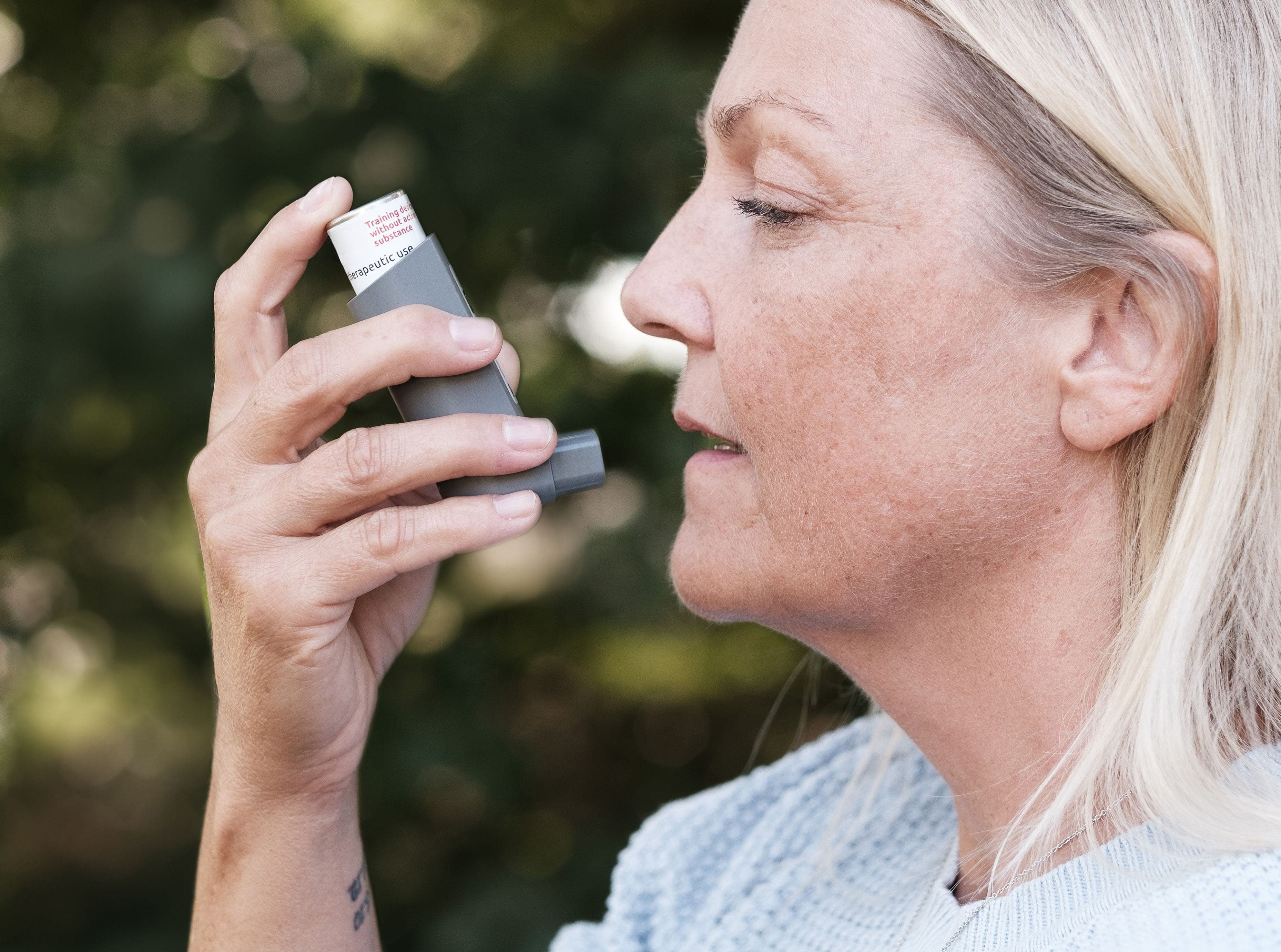
Ventolin Evohaler and Ventolin Accuhaler are both commonly prescribed blue inhalers used to relieve asthma and COPD symptoms, but they differ significantly in how they deliver medication to the lungs. Both inhalers contain salbutamol sulfate, a short-acting beta-2 agonist (SABA) and bronchodilator that helps open the airways during acute bronchospasms, asthma flare-ups, exercise-induced bronchospasm and symptoms associated with Chronic Obstructive Pulmonary Disease (COPD).
While the medicine itself is the same, the drug delivery mechanism is very different. The Ventolin Evohaler uses a pressurised aerosol spray that requires coordination between pressing the inhaler and breathing in, whereas the Ventolin Accuhaler is a dry powder device that is activated by a fast, deep breath. Understanding these differences can help patients and healthcare professionals choose the most suitable option in line with NHS prescribing guidelines.
At Mail My Meds, we regularly support patients prescribed both devices, including products manufactured by GlaxoSmithKline (GSK).
In One Sentence:
The main difference between a Ventolin Evohaler and a Ventolin Accuhaler is that they contain the same salbutamol medicine but use different inhaler technologies to deliver it into the lungs.
Key Takeaways
Do both inhalers contain the same medicine?
Yes, both contain salbutamol sulfate, a fast-acting bronchodilator that relaxes airway muscles and relieves breathing symptoms quickly.
Which device is easier to use?
Many patients find the breath-actuated Accuhaler easier because it removes the need for canister coordination and precise timing.
Are there environmental differences?
Yes, the Evohaler contains a greenhouse gas propellant and has a higher carbon footprint than the Accuhaler.
Which option is best?
Both inhalers can be effective when used correctly, but the best choice depends on inhalation technique and patient preference.
How do patients achieve the best outcome with their treatments?
Patients should always ensure they understand how to use their prescribed inhaler correctly to achieve the best treatment outcomes.
Key Specifications: Evohaler vs Accuhaler
The Ventolin Evohaler and Ventolin Accuhaler differ primarily in device design, medication formulation and inhalation technique.
Evohaler
The Ventolin Evohaler is a Pressurised Metered Dose Inhaler (pMDI) featuring an L-shaped actuator and a metal canister that contains a liquid aerosol suspension of salbutamol. Each actuation delivers 100 micrograms of medication. The inhaler requires press-and-breathe coordination and may be used with a spacer such as an AeroChamber Plus.
Accuhaler
The Ventolin Accuhaler is a Dry Powder Inhaler (DPI) housed in a round, disc-shaped plastic device with an integrated dose counter. Each dose contains 200 micrograms of microfine dry powder salbutamol. The device relies on breath-actuated inhalation and requires a sufficient inspiratory flow rate to draw the medicine into the lungs.
The Evohaler contains propellants including HFA-134a (Norflurane), while the Accuhaler contains lactose monohydrate and may contain trace milk proteins. From a sustainability perspective, a typical pMDI can generate around 28kg CO2e during its lifecycle compared with less than 1kg CO2e for many dry powder inhalers.
Feature | Ventolin Evohaler | Ventolin Accuhaler |
| Inhaler Category | Pressurised Metered Dose Inhaler (pMDI) | Dry Powder Inhaler (DPI) |
| Physical Formulation | Liquid aerosol suspension | Microfine dry powder |
| Strength Per Actuation | 100 micrograms | 200 micrograms |
| Device Design | L-shaped actuator with metal canister | Round, plastic disc-shaped device with a dose counter |
| Trigger Mechanism | Press-and-breathe coordination | Breath-actuated inhalation |
| Inhalation Technique | Slow and steady | Quick and deep |
| Spacer Compatibility | Yes (e.g., AeroChamber Plus) | No |
| Excipients / Propellants | HFA-134a (Norflurane) | Lactose monohydrate (contains trace milk proteins) |
| Carbon Footprint | ~28kg CO2e per inhaler | <1kg CO2e per inhaler |

Understanding Device Architecture and Delivery Mechanisms
The way an inhaler delivers medicine is often just as important as the medicine itself.
Correct inhaler technique has a major influence on treatment success. Although both Ventolin inhalers deliver salbutamol to the lungs, they achieve this through very different mechanisms. Understanding these differences can help explain why some patients achieve better symptom control with one device than another.
The Ventolin Evohaler pMDI
The Ventolin Evohaler uses a pressurised aerosol system to deliver medication into the lungs.
The Evohaler contains salbutamol suspended within a Hydrofluoroalkane (HFA) gas propellant, specifically Norflurane (HFA-134a). When the canister is pressed, a pre-measured mist is released, which should be inhaled slowly and steadily so the medication can travel through the throat and into the lungs.
One challenge with pMDIs is hand-breath coordination. Patients must activate the inhaler and inhale at the correct moment. Research has shown that serious inhaler errors occur in up to 92% of patients using pMDIs, with timing and coordination problems being among the most common causes of incorrect use [1].
"Patients with low inspiratory flow rates may still achieve effective treatment with a pMDI because the aerosol mist is propelled from the device. However, the press-and-breathe technique must be performed correctly. Using a spacer device creates a chamber that can make inhalation easier and improve medicine delivery."
The Ventolin Accuhaler DPI
The Ventolin Accuhaler relies on the patient's inhalation effort to deliver medication.
The device contains a coiled foil blister strip holding 60 individual doses. When the outer lever is operated, a blister opens and prepares a single dose for inhalation. The built-in dose counter allows patients to monitor how many doses remain.
Unlike a pMDI, the Accuhaler contains no propellant. Instead, the patient uses their own lung power to inhale microfine salbutamol into the airways. The formulation includes excipients such as lactose monohydrate, which acts as a carrier molecule for the medication.
Because the product contains lactose monohydrate, it may also contain trace milk proteins. Patients with severe or anaphylactic milk allergies should discuss suitability with their prescriber before use.
Patient Suitability: Which inhaler fits your profile?
The best inhaler is usually the one that matches a patient's abilities, preferences and clinical needs.
Patients with good hand-breath coordination may use either device successfully. However, those who struggle with coordination often find a dry powder inhaler (DPI) easier to use because it removes the need to synchronise inhalation with device activation.
Patients who cannot generate a sufficiently fast deep breath may find the Ventolin Evohaler more suitable, particularly when used with a spacer device. On the other hand, patients who can achieve the required inspiratory effort may prefer the convenience of the Accuhaler.
People with a severe milk protein allergy should be aware that lactose monohydrate used in the Accuhaler may contain trace milk proteins. Patients with an eco-conscious profile may also favour the Accuhaler due to its lower carbon footprint compared with propellant-driven inhalers.
Patient Profile & Needs | Most Suitable Device | Clinical Reasoning |
| Difficulty with hand-breath coordination | Ventolin Evohaler (with spacer) | A spacer completely removes the need to time the aerosol spray with your breath. |
| Capable of a fast, deep breath | Ventolin Accuhaler | Dry powder inhalers require adequate lung force to pull the powder into the airways effectively. |
| Severe milk protein allergy | Ventolin Evohaler | The Accuhaler contains lactose monohydrate, which carries trace milk proteins. The Evohaler does not. |
| Highly eco-conscious | Ventolin Accuhaler | The propellant-free design results in a drastically lower carbon footprint (under 1kg CO2e). |
NHS Sustainability Guidelines and the Shift to Low-Carbon Inhalers
The NHS is increasingly encouraging the use of lower-carbon inhalers where clinically appropriate.
Respiratory inhalers contribute significantly to the NHS carbon footprint because many traditional pMDIs contain greenhouse gases with a high Global Warming Potential (GWP). Studies have shown that switching from propellant-containing pMDIs to dry powder alternatives can reduce the carbon footprint of inhaler treatment by up to 85% while maintaining disease control [2].
This shift is particularly relevant in the UK. Research has highlighted that approximately 70% of inhalers historically sold in the UK were pMDIs, creating substantial emissions compared with many European countries, where DPI use is more common [3].
The environmental difference between devices is considerable. Research examining inhaler emissions demonstrates that hydrofluorocarbon propellants used in pMDIs generate a substantially larger carbon footprint than dry powder alternatives [4].
In practical terms, a Ventolin Evohaler may be associated with approximately 28kg of CO2e over its lifecycle, often compared to around 175 miles of car travel, while many DPI devices generate less than 1kg CO2e [5] [6].
The NHS Green Inhaler Guide, regional NHS formularies and recommendations from the National Institute for Health and Care Excellence (NICE) increasingly encourage healthcare professionals in primary care to discuss lower-carbon alternatives where appropriate. However, clinical effectiveness and patient suitability remain the primary considerations.
"Many primary care teams are supporting stable asthma patients who wish to consider lower-carbon options. This may involve discussing dry powder alternatives or eco-friendly pMDIs such as Salamol. Any transition should prioritise clinical outcomes and ensure the patient remains confident using their inhaler correctly."
How to Safely Order Your Salbutamol Reliever Inhaler Online in the UK
Patients should only obtain salbutamol inhalers through regulated and clinically supervised services.
Salbutamol inhalers are Prescription Only Medicines (POMs) in many online prescribing pathways and should only be supplied following assessment by a Registered UK prescriber. Reputable providers operate under standards set by the General Pharmaceutical Council (GPhC) and the Medicines and Healthcare products Regulatory Agency (MHRA).
A safe digital checkout process should include a structured online clinical assessment questionnaire covering medical history, asthma symptoms, current medication use and recent asthma review information. The pharmacy team may also advise patients to contact their local GP or asthma nurse where further assessment is required.
Asthma + Lung UK advises that frequent use of a reliever inhaler can indicate poor symptom control. As a general guide, requiring significantly more than two reliever inhalers per year may suggest sub-optimal asthma control and should prompt a medication review.
At Mail My Meds, patient safety remains central to every prescription review and dispensing decision.
Frequently Asked Questions
Can I use a spacer with a Ventolin Accuhaler?
No, spacers are designed for use with pressurised metered-dose inhalers (pMDIs) such as the Ventolin Evohaler and cannot be used with Dry Powder Inhalers (DPIs) like the Accuhaler.
Spacers hold the aerosol medication after release, allowing patients to inhale it more easily. The Accuhaler relies on rapid inhalation to pull dry powder medication into the lungs, so adding a spacer would prevent the device from functioning correctly.
Why does the Accuhaler have a higher dosage (200mcg) than the Evohaler (100mcg)?
The higher nominal dose reflects differences in delivery mechanics rather than differences in treatment strength.
The Accuhaler delivers a 200mcg dry powder dose because some medication remains within the device during inhalation. The Evohaler delivers medication as a mist, and two actuations (2 x 100mcg) may provide a comparable systemic therapeutic response in many clinical situations. The dosage figures should not be compared directly without considering how each device delivers medication to the lungs.
Is Ventolin being phased out by the NHS?
No, the active drug salbutamol remains an important treatment option across the NHS.
However, some local clinical commissioning groups and healthcare organisations are encouraging consideration of greener alternatives where clinically appropriate. This may include lower-carbon pMDI brands such as Salamol or dry powder devices. The aim is to reduce environmental impact without compromising patient care or access to effective salbutamol treatment.
Final Thoughts From Our Superintendent Pharmacist
"Choosing between a Ventolin Evohaler and a Ventolin Accuhaler is rarely about which inhaler is better overall. The right choice depends on inhalation technique, coordination, individual health profile and personal preferences. Some patients benefit from the familiarity of a blue inhaler used with a spacer, while others prefer the user-friendly design and lower carbon footprint of the Accuhaler. Factors such as milk protein allergy, inhalation ability and environmental considerations should all form part of the discussion. At Mail My Meds, our clinical team reviews every prescription carefully to help ensure patients receive a life-saving device that suits their needs and can be used confidently and effectively."
Sources
[3] Trends in inhaler use and associated carbon footprint: a sales data-based study in Europe
[6] Greener NHS » Improving health outcomes for respiratory patients while reducing carbon emissions
About the author
Blog author


Dayna Sheppard
Dayna is a pharmacy manager with over 15 years of pharmacy experience. She is focused on delivering a safe and excellent pharmacy service for patients.


