Free delivery on all NHS prescriptions — order now
- Home
- Chronic Conditions
- Diabetes
- Empagliflozin (Jardiance)
Empagliflozin (Jardiance)



Images for illustrative purposes only
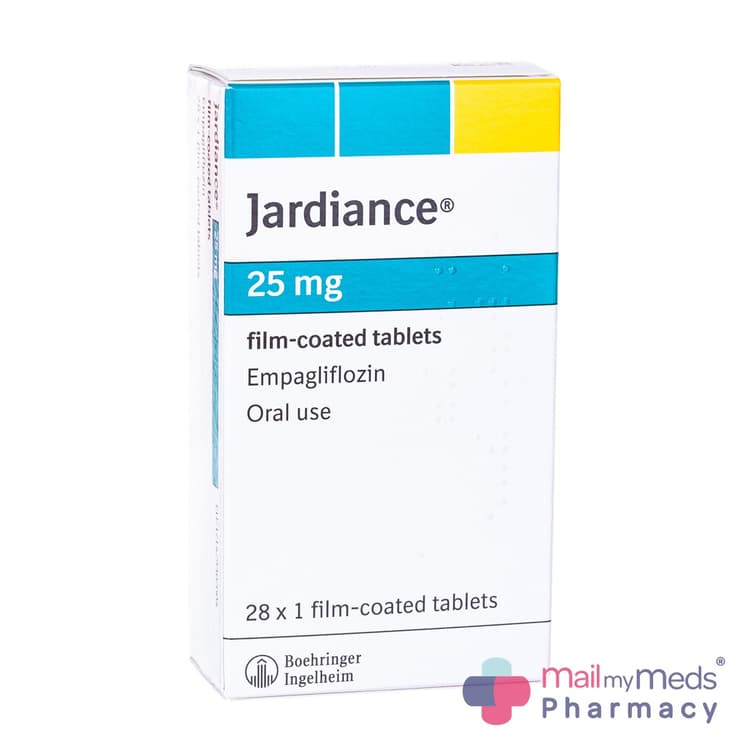
Empagliflozin is the new name for the medicine you may know as Jardiance: the same active ingredient, in the same 10mg and 25mg tablets. This prescription-only SGLT2 inhibitor treats type 2 diabetes and is also prescribed for heart failure and chronic kidney disease in some adults. It is available through our GPhC-registered pharmacy, following an online consultation and clinician assessment.
- Once-daily tablet, available in 10mg and 25mg strengths
- The same medicine you may know as Jardiance, now labelled empagliflozin
- An SGLT2 inhibitor for type 2 diabetes, heart failure and chronic kidney disease
- Prescribed by a UK-registered prescriber after an online consultation, with discreet delivery
More information
At a glance
- Same medicine, new name. Empagliflozin is the generic name for Jardiance. The active ingredient, manufacturer and 10mg and 25mg strengths are unchanged.
- How it works. It is an SGLT2 inhibitor that lowers blood sugar by helping the kidneys remove excess glucose in your urine.1
- What it treats. Type 2 diabetes in adults, and, for some people, chronic heart failure or chronic kidney disease.1
- How it is taken. One tablet, once a day, with or without food.
- Prescription only. At Mail My Meds, a GPhC-registered pharmacy, you can request a repeat prescription or complete a short online assessment for a registered prescriber to review.
"If you have been prescribed Jardiance, there is no need to worry when you see the name empagliflozin on your next pack. This is simply the medicine's generic name, and the tablet inside is exactly the same. Empagliflozin belongs to a group of medicines called SGLT2 inhibitors, and it is prescribed for type 2 diabetes as well as for some people living with heart failure or chronic kidney disease. It is designed to work alongside a healthy diet and regular activity, not instead of them. If you are living with any of these conditions and think empagliflozin may be right for you, the safest first step is a proper clinical assessment. Our team can review your health online and confirm whether this treatment is suitable before we dispense it."
Nothing about the medicine itself has changed. The manufacturer, Boehringer Ingelheim, is moving the product from its brand name, Jardiance, to its generic name, empagliflozin. This is known as "debranding", and it commonly happens once a medicine's patent expires. Your packaging and the name on the box may look different, but the active ingredient, strength and the way you take it stay exactly the same.
- Same active ingredient: empagliflozin, in the same 10mg and 25mg tablets.
- Same manufacturer and specification: made to the same standard as the medicine you know as Jardiance.
- Same use and dose: one tablet once a day, for the same licensed conditions.
- What is different: the brand name Jardiance is being phased out, so your pack will say empagliflozin.
Every empagliflozin product supplied in the UK contains the identical active ingredient and is held to the same quality and safety standards regulated by the Medicines and Healthcare products Regulatory Agency (MHRA). So whether your pack is labelled Jardiance or empagliflozin, you are receiving the same treatment.
You can get empagliflozin from Mail My Meds, a UK online pharmacy registered with the General Pharmaceutical Council (GPhC). Empagliflozin is a prescription-only medicine (POM), so it cannot simply be added to a basket. Supply is arranged either from a valid prescription or after a registered prescriber has reviewed a short, secure online assessment and confirmed the treatment is suitable for you.
There are two simple routes, depending on your situation:
1. You already have a prescription
If your GP or specialist has prescribed empagliflozin (or Jardiance), you can have your new or repeat prescription dispensed by Mail My Meds. We dispense your medicine and deliver it to your door, so you can manage your NHS or private prescription without a trip to the pharmacy.
2. You would like to start treatment
If you are not yet on empagliflozin, you can complete our online consultation. A registered prescriber reviews your answers, checks that the medicine is appropriate and safe for you, and only then approves supply. If empagliflozin is not right for you, our team will let you know and can suggest next steps.
- Complete a short health questionnaire. Tell us about your health, your diagnosis, any other medicines and your recent test results.
- Clinical review. A registered prescriber checks your answers against current guidance, including your kidney function where relevant.
- Dispensing and delivery. If approved, our GPhC-registered pharmacy dispenses your empagliflozin and sends it out in discreet packaging.
At Mail My Meds, empagliflozin is priced from £48.99 for a 28-tablet pack. The exact price depends on the strength you are prescribed, either 10mg or 25mg, and the quantity, and it is always shown clearly before you confirm. Your price covers dispensing by our GPhC-registered pharmacy and discreet, tracked delivery. Because empagliflozin is a prescription-only medicine, it is supplied only after a valid prescription or a registered prescriber's approval, so there is nothing to pay until your treatment is confirmed as suitable for you.
Empagliflozin is licensed to treat three related conditions in adults: type 2 diabetes, chronic heart failure and chronic kidney disease.1 It is most widely used for type 2 diabetes, where it helps to lower blood sugar. Because the same processes that damage blood vessels in diabetes also affect the heart and kidneys, empagliflozin is also prescribed to help protect these organs in suitable patients.
Type 2 diabetes
Type 2 diabetes is a lifelong condition where the level of glucose (sugar) in your blood is too high because your body cannot use insulin properly. Over time, high blood sugar can damage your eyes, nerves, kidneys, heart and blood vessels. Common symptoms include feeling very thirsty, passing urine more often (especially at night), tiredness, unintentional weight loss, blurred vision, slow-healing cuts and repeated episodes of thrush.1
Chronic heart failure
Heart failure means the heart is not pumping blood around the body as well as it should. It does not mean the heart has stopped, but it can cause breathlessness, tiredness and swollen ankles. Empagliflozin is licensed for chronic heart failure, including heart failure with reduced ejection fraction (HFrEF) and with preserved ejection fraction (HFpEF).
Chronic kidney disease
Chronic kidney disease (CKD) means the kidneys are not working as well as they should, usually developing slowly over many years. It is often linked to diabetes and high blood pressure. Empagliflozin is licensed to help slow the progression of CKD in suitable adults.1
These are three of the most common long-term conditions in the UK, affecting millions of people between them. Type 2 diabetes alone affects an estimated 4.2 million adults, and heart failure and chronic kidney disease each affect over a million more.
- Type 2 diabetes: more than 4.7 million people in the UK are diagnosed with diabetes, and around 90% of them (about 4.2 million) have type 2. A further 1.3 million may be living with undiagnosed type 2 diabetes.3
- Heart failure: more than 1 million people in the UK are living with heart failure, part of over 8 million people affected by cardiovascular disease.4
- Chronic kidney disease: an estimated 7.2 million people in the UK are living with CKD, and many early cases are undiagnosed because there are often no symptoms at first.5
Type 2 diabetes develops when the body either does not produce enough insulin or the cells stop responding to it properly, a process called insulin resistance. Insulin is the hormone that moves glucose out of the blood and into cells for energy. When it does not work well, glucose builds up in the blood. Several factors increase your risk.1
- Being overweight or living with obesity, particularly carrying weight around your middle.
- Being physically inactive.
- Being over 40 (or over 25 if you are of South Asian, African, African-Caribbean or Black African descent).
- A close family member with type 2 diabetes.
- High blood pressure or a history of gestational diabetes.
Many of these risk factors overlap with those for heart failure and kidney disease, which is one reason a single medicine such as empagliflozin can play a role across all three conditions.
Type 2 diabetes is treated with a combination of lifestyle changes and, where needed, medicines. Most people start with metformin, and other medicines are added based on your blood sugar levels, your weight, and your heart and kidney health. Empagliflozin is one of several options a prescriber may consider across the full range of diabetes treatments.2
| Medicine class | Examples | How it works | How it is taken | Points to note |
|---|---|---|---|---|
| Biguanide | Metformin | Reduces glucose made by the liver and improves insulin sensitivity | Tablet | Usually the first-choice medicine; can cause stomach upset |
| SGLT2 inhibitor | Empagliflozin (formerly Jardiance), dapagliflozin, canagliflozin | Helps the kidneys remove excess glucose in the urine; also studied for heart and kidney benefits | Tablet, once daily | Weight-neutral or small weight loss; can increase thrush and urinary tract infections |
| DPP-4 inhibitor | Sitagliptin, linagliptin | Boosts the body's own insulin response after meals | Tablet | Low risk of low blood sugar; weight-neutral |
| Sulphonylurea | Gliclazide | Prompts the pancreas to release more insulin | Tablet | Can cause low blood sugar and weight gain |
| GLP-1 receptor agonist | Dulaglutide and others | Increases insulin, slows digestion and reduces appetite | Injection (some tablets) | Often supports weight loss; usually added later |
| Insulin | Various | Replaces or tops up the body's insulin directly | Injection | Used when other medicines are not enough |
"No two people with type 2 diabetes are the same, so treatment is tailored to you. For someone who is also at risk of heart or kidney problems, an SGLT2 inhibitor like empagliflozin can be a sensible choice, but that decision always sits with your prescriber after looking at your full picture, including your kidney function."
How does empagliflozin work?
Empagliflozin blocks a protein called sodium-glucose co-transporter 2 (SGLT2) in the proximal tubules of your kidneys. Normally, this protein reabsorbs glucose back into your blood. By blocking it, empagliflozin lets more glucose leave your body in your urine, a process called glucosuria. This lowers your blood sugar without relying on the pancreas to make more insulin, and the extra fluid lost can also gently lower blood pressure.1 Empagliflozin has been studied in large international outcome trials, including EMPA-REG OUTCOME in type 2 diabetes, the EMPEROR heart failure trials, and EMPA-KIDNEY in chronic kidney disease.
Metformin remains the most commonly prescribed first-line medicine for type 2 diabetes in the UK, recommended by the National Institute for Health and Care Excellence (NICE) for most people alongside lifestyle changes.2 SGLT2 inhibitors such as empagliflozin have become one of the most widely used next steps, especially for people who also have, or are at risk of, heart or kidney disease. The most popular options patients ask us about include:
- Metformin (standard and slow-release), usually the starting point.
- Empagliflozin (formerly Jardiance) and other SGLT2 inhibitors such as dapagliflozin and canagliflozin.
- DPP-4 inhibitors such as sitagliptin, often chosen when a low risk of low blood sugar is important.
- Gliclazide, a sulphonylurea used when a quick reduction in blood sugar is needed.
Empagliflozin comes as 10mg and 25mg tablets and is taken once a day. Always take it exactly as your prescriber tells you, as your dose depends on why you are taking it and how your kidneys are working.1
| Reason for use | Usual dose | Strengths available |
|---|---|---|
| Type 2 diabetes | Start at 10mg once daily; a prescriber may increase to 25mg once daily if needed | 10mg, 25mg |
| Chronic heart failure | 10mg once daily | 10mg |
| Chronic kidney disease | 10mg once daily | 10mg |
How and when to take it
- Take one tablet once a day, with or without food.
- You can take it at any time of day, but try to take it at the same time each day. Many people take it in the morning, which can reduce the need to get up in the night to pass urine.
- Swallow the tablet whole with a drink of water. Do not chew it.
- If you forget a dose, take it as soon as you remember unless it is nearly time for your next one. Never take two doses to make up for a missed one.
Like all medicines, empagliflozin can cause side effects, although not everyone gets them. The most common are linked to the extra glucose in your urine, such as thrush and urinary infections. Most side effects are mild, but a few are serious and need urgent attention.1
Common side effects (more than 1 in 100 people)
- Genital thrush in men and women, with itching, soreness or discharge. A pharmacist can recommend an antifungal treatment.
- Urinary tract infections (UTIs), which may cause pain or burning when you pee.
- Passing urine more often than usual (polyuria). Drink plenty of sugar-free fluids to avoid dehydration.
- A mild skin rash or itching.
- Low blood sugar (hypoglycaemia), mainly if empagliflozin is taken with insulin or a sulphonylurea such as gliclazide.
Serious side effects: when to get urgent help
Stop taking empagliflozin and get medical help straight away if you notice any of the following:
- Diabetic ketoacidosis (DKA): feeling or being sick, stomach pain, fast or deep breathing, unusual tiredness, sweet or fruity-smelling breath, or feeling confused. DKA is a medical emergency, even if your blood sugar is not very high.
- Fournier's gangrene: severe pain, tenderness, redness or swelling in the genital or perineal area, with a high temperature. This is a rare but serious infection.
- Severe dehydration: feeling very thirsty, dark urine, dizziness or passing much less urine than normal.
- Signs of a serious allergic reaction such as swelling of the lips, face or throat, or difficulty breathing. Call 999.
You can report any suspected side effect through the MHRA Yellow Card scheme.6 Your Patient Information Leaflet lists side effects in full, so always read it before starting treatment.
Many people tell us that a type 2 diabetes diagnosis feels overwhelming at first, then becomes a manageable part of daily life. The condition is often picked up during a routine check or blood test, sometimes before any obvious symptoms appear. Everyday experiences people describe include:
- Adjusting to checking blood glucose and understanding what the numbers mean.
- Learning to read food labels and rethink portion sizes and snacks.
- Fitting more movement into the week, from brisk walks to more active hobbies.
- Noticing more energy and steadier blood sugar once treatment and routine settle in.
- Valuing regular reviews with a GP, practice nurse or pharmacist to stay on track.
Support is widely available. Diabetes UK runs a helpline and online community, and the NHS offers structured education courses that help you build confidence in managing the condition day to day.
Empagliflozin is suitable for many adults with type 2 diabetes, chronic heart failure or chronic kidney disease, but it is not right for everyone. A prescriber will check your medical history, current medicines and kidney function before recommending it.1 It may not be suitable, or may need extra care, if you:
- Have type 1 diabetes (empagliflozin is not licensed for this).
- Have had diabetic ketoacidosis in the past.
- Have significantly reduced kidney function, which your prescriber will assess using a blood test called eGFR.
- Are pregnant, trying to become pregnant or breastfeeding.
- Are over 75, or are prone to dehydration or repeated genital or urinary infections.
- Follow a very low-carbohydrate or ketogenic diet, which can raise the risk of DKA.
Before you start empagliflozin, tell your prescriber about all the medicines you take and any other health conditions. Some combinations need closer monitoring, and there are situations where you may need to pause your tablets.
Sick-day guidance
If you become acutely unwell, for example with vomiting, diarrhoea, a fever or an infection, or if you cannot eat or drink normally, you may need to stop empagliflozin temporarily. This lowers the risk of dehydration and DKA. Follow the sick-day advice your prescriber gives you, and restart only once you are eating, drinking and feeling better.
Medicines that can interact
- Water tablets (diuretics) such as furosemide can add to fluid loss and increase the risk of dehydration and low blood pressure.
- Insulin and sulphonylureas such as gliclazide raise the risk of low blood sugar, so your prescriber may adjust these doses.
- Medicines for blood pressure may need reviewing, as empagliflozin can gently lower blood pressure.
Also let your team know before any surgery, as empagliflozin is usually paused around planned operations.
See a doctor promptly if your blood sugar readings are consistently high or low, if you have symptoms of a urinary or genital infection that is not settling, or if you feel unusually unwell. Seek same-day advice for signs of dehydration, and call 999 or go to A&E for symptoms of diabetic ketoacidosis or a serious allergic reaction. You should also arrange a review if:
- You are newly diagnosed and unsure how to manage your condition.
- Your symptoms are getting worse despite treatment.
- You are planning a pregnancy or have become pregnant.
- You are due for your regular diabetes, heart or kidney checks, including blood pressure and kidney function tests.
Medicines work best alongside healthy habits, and for some people lifestyle changes alone can significantly improve type 2 diabetes. The same changes also protect your heart and kidneys. Evidence-based steps include:
- Eating well: plenty of vegetables, wholegrains, beans and pulses, with less sugar, refined carbohydrates and ultra-processed foods.
- Moving more: aim for at least 150 minutes of moderate activity a week, plus reducing time spent sitting.
- Managing your weight: losing excess weight can improve blood sugar and, in some cases, lead to remission of type 2 diabetes.
- Stopping smoking and keeping alcohol within recommended limits.
- Sleep and stress: good sleep and stress management support steadier blood sugar.
Yes. Non-medical approaches are the foundation of managing type 2 diabetes and supporting heart and kidney health, and they are recommended for everyone, with or without medicine.2 These include:
- Structured education such as the NHS DESMOND or X-PERT programmes, which help you understand and self-manage your condition.
- Dietary change, sometimes including a lower-calorie approach under professional guidance, which can help some people achieve remission.
- Regular physical activity tailored to your ability.
- Blood glucose and blood pressure monitoring at home, using tests and monitors you can buy over the counter.
- Regular reviews with your GP, practice nurse, pharmacist or specialist team.
These measures work best hand in hand with any prescribed treatment, rather than as a replacement for medicines your prescriber advises.
Starting is straightforward and can be done from home in minutes. Because empagliflozin is a prescription-only medicine, a registered prescriber must confirm it is right for you before we dispense it.
- Choose your route. Request a repeat if you already have a prescription, or complete an online consultation to be assessed.
- Share your health details. Complete the secure questionnaire, including your diagnosis, other medicines and recent results.
- Clinical review. A registered prescriber reviews your information and checks suitability, including kidney function where relevant.
- Delivery. Once approved, your GPhC-registered pharmacy dispenses your empagliflozin and delivers it discreetly.
Is empagliflozin the same as Jardiance?
Yes. Empagliflozin is the generic name for the medicine previously sold as Jardiance. The active ingredient, the 10mg and 25mg strengths and the way you take it are all the same. The manufacturer is simply moving from the brand name to the generic name, which is why your packaging may look different.
Why has the name on my pack changed from Jardiance to empagliflozin?
This is called debranding, and it usually happens when a medicine's patent expires. Boehringer Ingelheim is phasing out the Jardiance brand name and supplying the same medicine under its generic name, empagliflozin. You are receiving the same treatment, held to the same MHRA quality standards.
What is empagliflozin used for?
Empagliflozin is used to treat type 2 diabetes in adults. It is also licensed for some adults with chronic heart failure or chronic kidney disease, where it can help protect the heart and kidneys. It is not used for type 1 diabetes.
How long does empagliflozin take to work?
Empagliflozin starts lowering blood sugar within a few hours of your first dose, and reaches its full effect after about a week. Your prescriber will usually check your blood sugar and kidney function over the following weeks and months to see how well it is working for you.
Does empagliflozin cause weight loss?
Empagliflozin is not a weight-loss medicine, but because it removes glucose (and therefore some calories) through your urine, many people notice a small amount of weight loss. Any weight change should be seen as a side benefit of managing your condition, not the main reason for taking it.
Can I drink alcohol while taking empagliflozin?
Most people can drink alcohol in moderation, but heavy drinking can increase the risk of dehydration and low blood sugar, and can raise the risk of DKA. Stick to the UK guideline of no more than 14 units a week, spread over several days, and speak to your prescriber if you are unsure.
Do I need a prescription to get empagliflozin from Mail My Meds?
Yes. Empagliflozin is a prescription-only medicine. You can request it if you already have a prescription, or complete our online consultation so a registered prescriber can assess whether it is suitable before it is dispensed.
Key studies, trials and reviews
- Zinman B, et al. Empagliflozin, Cardiovascular Outcomes, and Mortality in Type 2 Diabetes (EMPA-REG OUTCOME). New England Journal of Medicine, 2015.
- Packer M, et al. Cardiovascular and Renal Outcomes with Empagliflozin in Heart Failure (EMPEROR-Reduced). New England Journal of Medicine, 2020; and Anker SD, et al. EMPEROR-Preserved, 2021.
- The EMPA-KIDNEY Collaborative Group. Empagliflozin in Patients with Chronic Kidney Disease (EMPA-KIDNEY). New England Journal of Medicine, 2023.
- National Institute for Health and Care Excellence (NICE). Type 2 diabetes in adults: management (NG28).
Further reading
- NHS. Empagliflozin: medicines A to Z.
- Diabetes UK. Diabetes statistics, 2024 to 2025.
- British Heart Foundation. Heart and circulatory disease facts and figures, 2025.
- Kidney Research UK. Kidney disease: a UK public health emergency, 2023.
- MHRA. Yellow Card scheme for reporting side effects. See also the BNF entry for empagliflozin.
This information is provided for general educational purposes only and is not a substitute for personalised advice from a qualified healthcare professional. It should not be used to diagnose or treat a health condition. Always speak to your GP, pharmacist or prescriber about your individual circumstances before starting, stopping or changing any medicine. If you think you are having a medical emergency, call 999 or go to your nearest A&E.
Our health content is written in plain English and regularly reviewed by our team of medical experts, including our Superintendent Pharmacist, to make sure it stays accurate, evidence-based and up to date. We reference trusted sources such as the NHS, NICE, the BNF and the MHRA, and we update our pages as guidance changes. This page was last reviewed on 4th September 2026 by Rachael Clarke MRCPharm, Superintendent Pharmacist.


